✦ Origins ✦
BalletX was founded in Philadelphia in 2005 by dancer-choreographer Christine Cox and dancer-choreographer Matthew Neenan, who began the venture as a small summer project for dancers between seasons before it grew into a year-round professional company. Both founders brought backgrounds in classical ballet performance into a project explicitly aimed at making room for new choreographic voices rather than preserving an existing repertory.
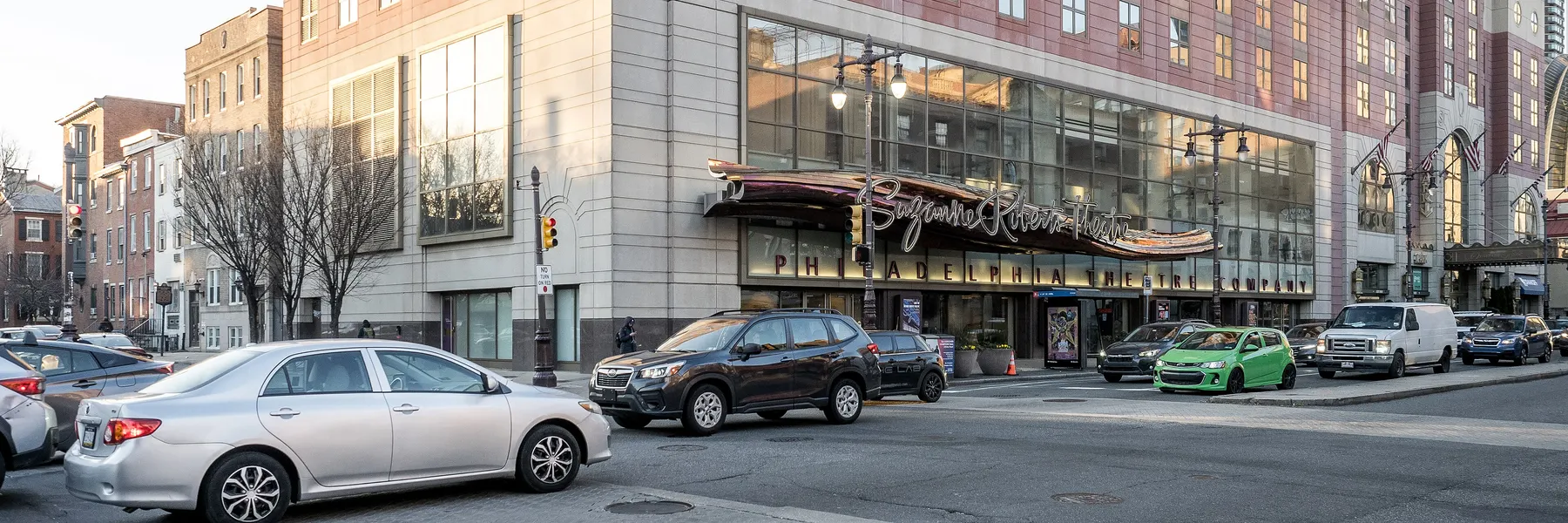
That founding impulse hardened into a defining structural choice: from its earliest seasons, BalletX has built its repertory almost entirely from new commissions rather than existing pieces drawn from another choreographer's back catalog - across its first fourteen years, the company staged only a handful of works not originally made on its own dancers. The overwhelming majority of works performed under the BalletX name have been made specifically on and for its own dancers. For many years BalletX was the resident company of Philadelphia's Wilma Theater, which gave it a consistent home stage for premieres; in 2024 it moved its home seasons to the Suzanne Roberts Theatre. The company also tours nationally and develops new pieces through summer intensives and commissioning initiatives.
Artistic Identity
Because every BalletX program is new by definition, the company's identity is less a single house style than a curatorial one: each season, its artistic leadership invites a mix of choreographers - some ballet-trained, some coming from contemporary or modern backgrounds - to build short, tightly crafted works on a mid-size ensemble of highly versatile dancers. Neenan's own choreography anchored much of the company's early identity, and the commissioning model has since made BalletX a proving ground where choreographers early in their careers work alongside more established names, producing a repertory defined by range and experimentation rather than a single inherited vocabulary.
Choreographic Voices
Beyond co-founder Matthew Neenan, BalletX's commissioning list has included choreographers such as Jorma Elo, Trey McIntyre, and Annabelle Lopez Ochoa, giving the company's dancers regular exposure to sharply different choreographic voices within a single season. That variety is itself part of the pitch to touring presenters and audiences: a BalletX program functions less like a themed evening and more like a sampler of where new choreography for ballet-trained dancers is headed.
Why It Matters
Most contemporary ballet companies mix commissioned premieres with revivals of proven repertory; BalletX's refusal to do the latter makes it an unusually pure test of the commissioning model as a way to run a company. That structure has made it a significant incubator for new choreographic talent in American contemporary ballet, and a reference point for how a mid-size regional company can build an entire identity around risk rather than repetition.
Sources & Further Reading
- Mission & History, BalletX
- From Pick-Up to Premieres: How BalletX Has Grown Into a Coveted Company Prioritizing New Work, Pointe (2020)
- BalletX looks ahead with new ballets, a new theater, and a stable future, The Philadelphia Inquirer (2024)
Spotted an error or an out-of-date detail? Get in touch - corrections are always welcome.