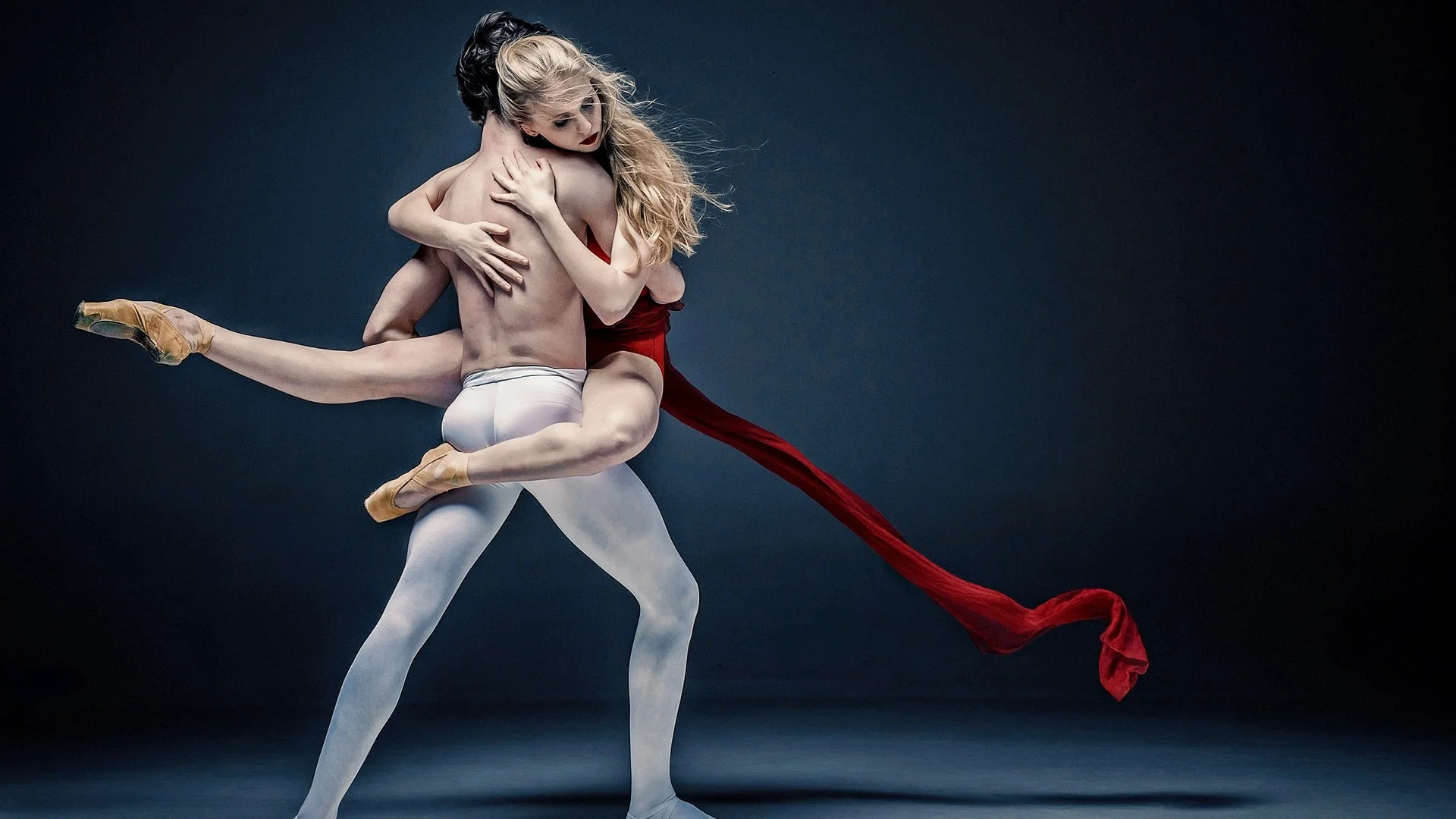
✦ Who He Is ✦
Justin Peck trained at the School of American Ballet, New York City Ballet's affiliated academy, and joined the company's corps de ballet in 2007. He began choreographing for NYCB's in-house workshops while still a corps dancer, and the strength of those early pieces led to a fast rise: he was named the company's resident choreographer in 2014, while still dancing, and later became its artistic advisor. He is widely regarded as the choreographer most responsible for defining what a 21st-century New York City Ballet premiere looks like, carrying the company's Balanchine-rooted neoclassical tradition forward without simply repeating it.
Peck's choreography favors a restless, athletic energy — quick directional changes, casual contemporary posture layered onto classical technique, and a sense of youthful, ensemble-driven momentum that owes as much to sport and street movement as to ballet's own vocabulary. He has become known for close collaborations with contemporary composers and designers, treating each new commission as an opportunity to build a distinct visual and sonic world rather than defaulting to a house style.
Signature Works
In Creases (2012)
Peck's early breakthrough, made for NYCB's choreographic workshop to Philip Glass's Four Movements for Two Pianos, announced his gift for propulsive, intricately patterned ensemble work.
Everywhere We Go (2014)
A large-scale main-stage commission set to an original score by Sufjan Stevens, one of several collaborations with the composer that helped define Peck's contemporary musical sensibility.
The Times Are Racing (2017)
Danced in sneakers to music by Dan Deacon, this work folds tap and street-dance inflections into ballet vocabulary and includes a landmark same-sex pas de deux for NYCB. Read the full profile →
Illinoise (2023)
A narrative dance-theatre piece built from Sufjan Stevens' concept album Illinois, staged Off-Broadway and then on Broadway, where it earned Peck the Tony Award for Best Choreography.
Style & Method
Peck choreographs from a place of deep familiarity with classical technique — he trained and performed inside it for years — but applies that vocabulary with a contemporary, unpretentious physicality, often in sneakers or simple practice clothes rather than tights and pointe shoes. His scores tend to come from living composers and songwriters rather than the standard orchestral repertoire, and his stagings for Broadway and film, including choreography for Steven Spielberg's 2021 film of West Side Story and the 2018 Broadway revival of Carousel, have made him one of the few working ballet choreographers with a substantial commercial-theatre profile.
A Recurring Partnership With Sufjan Stevens
Peck's collaborations with composer and songwriter Sufjan Stevens run through much of his career, from the 2014 NYCB commission Everywhere We Go through to Illinoise, the Tony-winning dance-theatre adaptation of Stevens' 2005 concept album Illinois. That repeated pairing is unusual for a choreographer working primarily inside a major ballet company, where commissions more often default to newly written orchestral scores, and it reflects Peck's broader preference for contemporary songwriting and popular music as legitimate ballet source material.
Legacy
As New York City Ballet's most consistently produced living choreographer, Peck has effectively set the tone for how the company presents itself to new audiences, alongside contemporaries such as Christopher Wheeldon and Alexei Ratmansky. His crossover success in commercial theatre and film has also helped demonstrate that a career built inside a major ballet company need not be confined to the opera house.