✦ Origins ✦
Minus 16 premiered in 1999 in The Hague, staged on Nederlands Dans Theater 2 rather than on Ohad Naharin's own Batsheva Dance Company. It is not a single through-composed work but a collage, assembling and reworking material Naharin had already made for earlier pieces - principally Mabul (1992), Anaphaza (1993), and Zachacha (1998) - into a single, self-contained evening piece that companies without any other connection to Naharin's own repertory could stage on their own dancers.
Its best-known section, set to a rock arrangement of the Passover song "Echad Mi Yodea" ("Who Knows One?"), has its own longer history: the choreography originated in 1990 as part of Kyr, Naharin's first work as Batsheva's newly appointed artistic director, then was reworked - faster, and with dancers in black suits and white shirts rather than the original's khaki shirts and shorts - as the opening of Anaphaza in 1993. It was that black-suited version of "Echad Mi Yodea," by then closely associated with the dancers stripping down verse by verse over the course of the song, that Naharin folded into Minus 16 six years later.
What Makes It Distinct
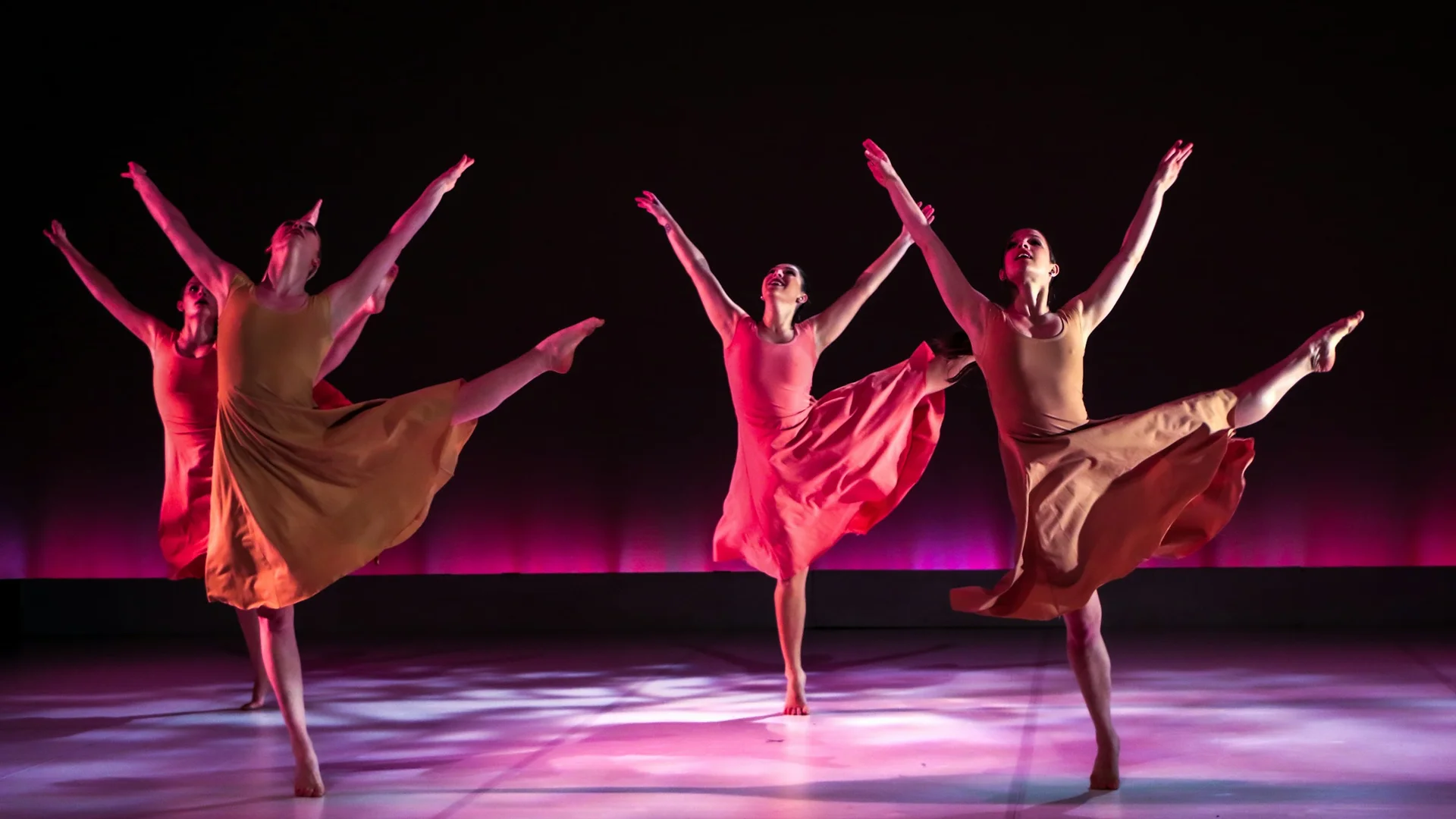
The piece's structural center is the "Echad Mi Yodea" sequence: dancers in dark suits sit in a semicircle of plain chairs and move through the song's thirteen accumulating verses in tight unison, escalating from small, pedestrian gestures to full-body thrashing, standing and stomping on the chairs, and violent backbends, before stripping off their suits and throwing them into the center of the stage. Set against an eclectic score that also runs through Dean Martin, mambo, and techno, the sequence's discipline and its release into abandon encapsulate the sensation-driven physicality of Naharin's Gaga movement language in miniature.
Minus 16 is equally known for breaking the fourth wall outright: it typically closes by having dancers move out into the house and bring audience members up onstage to dance alongside the company, an unscripted element that means no two performances play out quite the same way. That mix of rigorous set choreography and unpredictable live participation, built from a choreographer recycling and recombining his own past work rather than inventing wholly new material, is unusual even among contemporary dance's collage pieces.
Reception & Legacy
Minus 16 has become Naharin's single most widely performed work, entering the repertory of companies with no other connection to Batsheva, including Alvin Ailey American Dance Theater, Cedar Lake Contemporary Ballet, Compañía Nacional de Danza, and Staatsballett Berlin, alongside Batsheva's own dancers and the Nederlands Dans Theater company that originated it. Because it is built from self-contained excerpts rather than a fixed narrative, it travels unusually well, functioning for many companies and audiences as their first encounter with Naharin's choreography.
That accessibility has also made it a recurring flashpoint: the "Echad Mi Yodea" material's earlier life as part of Anaphaza was already politically charged in Israel - in 1998, Naharin refused a government request to have dancers wear additional underwear beneath their costumes for a state ceremony marking Israel's fiftieth anniversary, and Batsheva withdrew from the event rather than alter the choreography - and later stagings of Minus 16 by other companies have occasionally drawn objections on similar grounds. That history has done little to slow its spread; if anything, it has reinforced the piece's reputation as one of contemporary dance's most direct, audience-facing statements of what Gaga-trained movement looks like on stage.
See Also
Read the full profile of choreographer Ohad Naharin, and learn more about Batsheva Dance Company, where the Gaga movement language underlying this piece was developed.